Showing posts with label Catholic Church. Show all posts

Wednesday, 11 December 2024

The Residential Schools: were they schools?


"Residential schools (in Canada) did not arise from a well-meant initiative run amok. Even the most basic research reveals the destructive intent at the foundation of their design and implementation. They were not schools. They were institutions akin to the re-education centres of the Cultural Revolution in China and its current re-programming camps where ethnic Uyghurs are detained."

    - Michelle Good in "Truth Telling"

This truth needs to be repeated insistently until reconciliation moves beyond hand-wringing words - to action - specifically the 94 Calls to Action of the Truth and Reconciliation Commission in 2015.

The Truth and Reconciliation Commission (TRC) of Canada issued 94 Calls to Action, several of which are directed specifically to the Catholic Church. Here are the key ones that apply to the Catholic Church:

1. Call to Action 58: The TRC calls upon the Pope to issue an apology to Survivors, their families, and communities for the Roman Catholic Church's role in the spiritual, cultural, emotional, physical, and sexual abuse of First Nations, Inuit, and Métis children in Catholic-run residential schools.

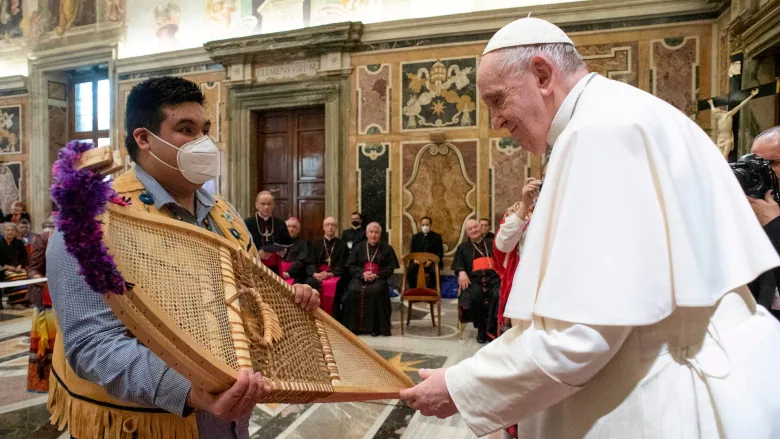
- Pope Francis came to Canada in the summer of 2022 and gave an apology. Some feel that it was just an apology for what "some" Catholics did historically, not an apology for what the Catholic Church did in facilitating and promoting colonial hegemony. Still, it was a well-intentioned start that was accepted by some Indigenous leaders.

2. Call to Action 59: This call asks church parties to the Settlement Agreement to develop ongoing education strategies to ensure that their congregations learn about their church's role in colonization, the history and legacy of residential schools, and why apologies to former residential school students, their families, and communities were necessary.

- There has been no effective action on this whatsoever. At the very least there could be an Indigenous Land Acknowledgement before Sunday mass in every parish church in every diocese in Canada. 

3. Call to Action 60: The TRC calls upon leaders of the church parties to the Settlement Agreement and all other faiths, in collaboration with Indigenous spiritual leaders, Survivors, schools of theology, seminaries, and other religious training centers, to develop and teach curriculum for all student clergy, and all clergy and staff who work in Aboriginal communities, on the need to respect Indigenous spirituality in its own right, the history and legacy of residential schools, and the roles of the church parties in that system.

- Very few priests and deacons would appear to have even heard of the Doctrine of Discovery, even young priests fresh out of seminary. Catholic priests are largely ignorant of Indigenous spirituality, the history and legacy of residential schools, and the roles of the church parties in that system. On the contrary, much of what we hear is more defensive in nature or, at best, verbal hand-wringing devoid of acknowledging actual historical facts with present-day repercussions.

4. Call to Action 61: This call asks church parties to the Settlement Agreement, in collaboration with Survivors and representatives of Aboriginal organizations, to establish permanent funding to Aboriginal people for community-controlled healing and reconciliation projects.

- There has been some movement here in many dioceses, dependent upon donations to the Indigenous Reconciliation Fund. Most Catholics in the pew view their donations to this fund as charity, or in the same category as funds needed to pay victims of clergy sexual abuse.

These Calls to Action aim to address the historical injustices, and promote healing and reconciliation between the Catholic Church and Indigenous communities in Canada. It's time for a lot more concrete and effective action in response to the calls of the TRC made way back on the 15th December 2015.

Wednesday, 6 November 2024

Sending Thoughts and Prayers


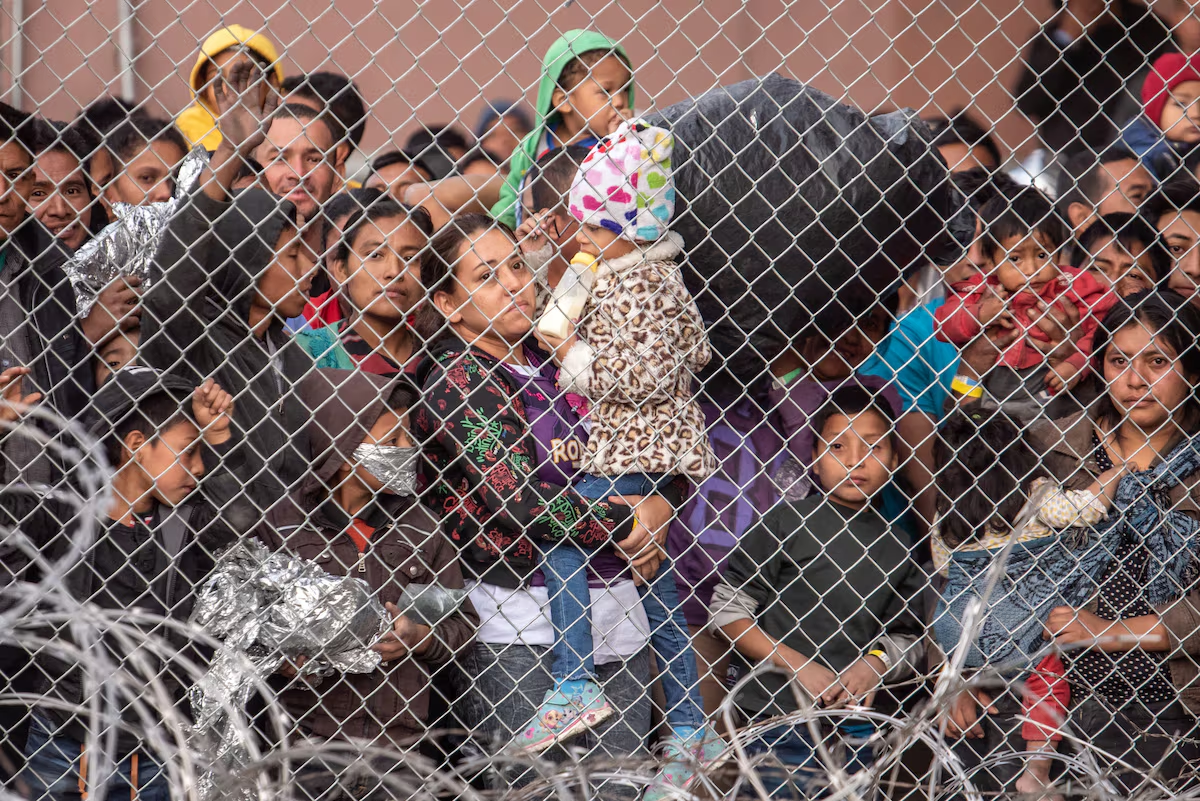
Immigrant children in a cage.
Image credit: Washington Post

For the last 12 or 18 months I have had the kind of feeling you get when someone or something vital is missing - this with regard to the United States. Today it feels like a corpus delicti has been trotted out in some kind of cruel, twisted triumph. No emoji can express how I feel.

I believe history will show that today is a huge indictment on American Christians, including, perhaps especially, Catholics. I feel betrayed by Catholic leadership, ashamed of this family.


Friday, 6 September 2024

Isn't it time to ordain women to the diaconate?


Image credit: National Catholic Reporter

Franciscan Fr. Daniel P. Horan is the director of the Center for the Study of Spirituality, and professor of philosophy, religious studies and theology at Saint Mary's College in Notre Dame, Indiana. Under the headline, "Enough already. It is time to ordain women to the diaconate" he writes in National Catholic Reporter:

At the risk of stating the obvious, it is clear that the Roman Catholic Church (or at least many of those entrusted with the highest levels of leadership) has a serious problem with women. Pope Francis has made great strides in some aspects of extending invitations for greater involvement by and representation of women in some aspects of church leadership, including the appointment of several women to significant posts in Vatican dicasteries and expanding voting rights at the synod to all participants, which includes lay and religious women. 

But the way the pope often speaks about women in abstract ways doesn't sound much different from Pope John Paul II's "separate but equal" complementarianism, which argued for keeping women in "traditional" familial and ecclesial roles and praising their "genius." A decade ago, journalist David Gibson compiled a list of seven examples of Francis talking about women in what the kids might call "cringy" ways. And these came just from the first year of his pontificate.

You can read the full article in National Catholic Reporter here.

Tuesday, 18 June 2024

Some Thoughts on the Feast of Corpus Christi


I grew up as a privileged white male Catholic in Apartheid South Africa. In my senior high school days I slowly started to become politically aware, increasingly so through my student days and into adulthood. Outspoken critics of apartheid such as Desmond Tutu, Anglican Archbishop of Cape Town and Eugene Hurley O.M.I., Catholic Archbishop of my home town, Durban, inspired me and others to try to live with integrity as a Christian in the context of that place and time. 

There were also a few priests who dared to interpret and apply the Sunday mass readings to the social context and unjust laws of that time. These were all branded by politicians and by many in the white congregations as "meddlesome priests" and "churchmen meddling in politics who should stick to religion," even though there was nothing partisan in their homilies. Some were arrested and deported. Others were detained for 72 hours for questioning, released as required by law, and then immediately detained again for another 72 hours of 'questioning', all within the law. A close priest friend of mine, Fr Cosmas Desmond O.F.M., was banned and placed under house arrest. Another close friend, Fr Casimir Paulsen cmm, was arrested and then deported. Author, Catholic theologian and National Chaplain of the Young Christian Students (YCS) Albert Nolan O.P., went into hiding for a period.

More deafening, however, was the pious and devout silence of the majority of Christian and Catholic preachers. As happened in Germany after the Second World War, so after the fall of apartheid, the Catholic Church scrambled to find names of priests and bishops who had 'grasped the nettle' and spoken out against the evils of the previous regime.

With this as background, I recommend to your reading pleasure the Sunday Scripture Reflection for the Feast of Corpus Christi this year from the Catholic Theological Union by Scott C Alexander. I believe that this is an excellent example of "grasping the nettle".

Sunday, 1 October 2023

Orange Shirt Day - and Silence

Every word has consequences. Every silence, too. - Sartre


September 30th was Orange Shirt Day in Canada. On this day Indigenous people were remembering the cultural genocide and abuse that took place in the Indian Residential Schools that were operated by Catholic and other Christian denominations on behalf of the Government of Canada to "take the Indian out of the child.” (Sir John A. Macdonald)

At an Orange Shirt Day event in downtown Peterborough on Saturday, one of the organizers acknowledged the presence of some civic and political leaders, and police officers, who came, not to speak, but to listen. To my mind, that is a good silence, a silence that begets good consequences.

I was also aware of the conspicuous absence of any mention of representatives from Christian churches in Peterborough, notably for me, the Catholic Church. That silence was deafening - and severely consequential.

Saturday, 23 July 2022

Anticipated Papal Apology - Canada 2022


Image credit: https://i.cbc.ca

Different people have emphasised different elements and narratives if the coming, long awaited apology from Pope Francis this month of July, 2022, is to have any hope of acceptance from Indigenous Peoples in Canada, and especially from survivors and others impacted by forced residential schooling which the Catholic Church so enthusiastically and vigorously implemented on behalf of the Canadian Government in the nineteenth and twentieth centuries; even before we get to recalling the sexual and other abuses that went on for so long and were covered up by complicit hierarchy for decade after decade.

The 'apology' will surely be comprised of the entire pontifical visit, from landing to takeoff, and not just the 'words of institution', as it were.

I am of the opinion that the Catholic residential schools debacle is just one, albeit a very major one, of many 'sins' for which the Catholic Church needs to publicly repent. Consider all the unjust wars, slavery, persecutions, murders, rapes, pillage, theft and imperialistic colonizing that took place subsequent to, and enabled and condoned by what is now called The Doctrine of Discovery. If you don't know what this is, or to refresh your memory, please see this one or two minute read: https://doctrineofdiscovery.org/dum-diversas/

For those who think that sincere and humble words should be enough, consider the following story from Father Mxolisi Mpambani told by Antjie Krog in Chapter 10 of her book, Country of my Skull, which deals with the South African Truth and Reconciliation Commission post apartheid.

Once there were two boys, Tom and Bernard. Tom lived right opposite Bernard. One day Tom stole Bernard's bicycle and every day Bernard saw Tom cycling to school on it. After a year, Tom went up to Bernard, stretched out his hand and said, "Let us reconcile and put the past behind us."

Bernard looked at Tom's hand. "And what about the bicycle?"

"No," said Tom, "I'm not talking about the bicycle - I'm talking about reconciliation."


True reconciliation requires remorse, repentance, restitution, reparation, reform, unbounded respect, and acceptance of the fact that forgiveness might still not be forthcoming in our lifetime.

Friday, 27 August 2021

For Catholics, are the laity really boss of the environment?

Image: https://www.newsecuritybeat.org/2016/01/paris-whats-status-environmental-refugees/

Pope Francis has written an amazing encyclical on The Care of Our Common Home - Laudato 'Si. In it he points out that care for the environment, and care for the people most vulnerable to the ravages of climate change, are two sides of the same coin. Although it is the Pope who has taken the lead in melding the best of theology and science to produce this social encyclical, the laity have the principal role in putting that care into practice - this according to the Vatican II Dogmatic Constitution on the Church, Lumen Gentium, paragraph 36...

"36... The faithful, therefore, must learn the deepest meaning and the value of all creation, as well as its role in the harmonious praise of God. They must assist each other to live holier lives even in their daily occupations. In this way the world may be permeated by the spirit of Christ and it may more effectively fulfill its purpose in justice, charity and peace. THE LAITY HAVE THE PRINCIPAL ROLE IN THE OVERALL FULFILLMENT OF THIS DUTY. Therefore, by their competence in secular training and by their activity, elevated from within by the grace of Christ, let them vigorously contribute their effort, so that created goods may be perfected by human labor, technical skill and civic culture for the benefit of all men according to the design of the Creator and the light of His Word. MAY THE GOODS OF THIS WORLD BE MORE EQUITABLY DISTRIBUTED AMONG ALL MEN, and may they in their own way be conducive to universal progress in human and Christian freedom. In this manner, through the members of the Church, will Christ progressively illumine the whole of human society with His saving light."

So, that all sounds wonderful, but it begs a few questions: How do we do this caring - for the environment and the environmentally vulnerable, especially environmental refugees? How important is this in the grand scheme of our daily lives and other responsibilities? How do we generate enthusiasm for the cause? In short, how do we make a difference? AND... How does accountability work?

Saturday, 31 July 2021

What is clericalism? This is clericalism.


Image: https://www.cbc.ca/news/canada/manitoba/rheal-forest-residential-schools-1.6121886

Winnipeg Catholic priest accuses residential school survivors of lying about abuse for money

Why did I not read anywhere about the congregation walking out during this 'sermon'. Silence will be construed as assent. When are lay Catholics going to take a stand against clericalism? I hear many Catholics today objecting to being tarred with the brush of what happened 'historically', but silence in the face of 'sermons' like this makes us complicit.

So, what makes this clericalism?

I see this as a classic case:
1) a member of the clerical hierarchy is defending the clerical institution;
2) doing so from a position of institutional authority, namely the pulpit, during the Sunday liturgy over which he presides;
3) he exonerates the priests and nuns;
4) he blames the lay workers;
5) he trivializes any abuse as to be expected in "any institution";
6) he shows not one drop of empathy for victims;
7) he accuses victims of lying to get more money;
8) he angrily accuses "the media" of propagating "fake news";
9) according to the CBC article, the only other outrage he expresses is toward vandals who paint graffiti on a church building.

Any single one of these constitutes clericalism. To get so many in one event is quite an achievement.

In disavowing and apologizing for the priest's statements, the Archdiocesan spokesperson said, "We very much regret the pain they may have caused to many people..." MAY have caused? How polite! Why not, "they obviously MUST have caused...?"

The first and immediate response from the archdiocese was damage control: a polite apology, and preventing this priest from making any further public statements. And that is how it will be perceived and what will be remembered: damage control for the sake of the institutional church.

What about the victims? A subsequent statement from the Archbishop did acknowledge the victims, but by then the damage had been done and the clericalism exposed.

How many steps forward and how many steps backward?

Saturday, 24 July 2021

The scandalous minutiae of clericalism


The other day, the first reading for mass of the day was the giving of the "Ten" Commandments from Exodus. I was reminded of a day-dreaming moment in class in grade 9 (who knows what subject?) when I wondered why God decided upon THOSE ten commandments. Testosterone driven, I considered how much more fun and how much less guilt I would have if certain commandments simply weren't there. In my understanding, the Ten Commandments were arbitrarily decided upon by an all powerful God. And then there was the Church: the priest and catechism teachers who put an even stricter interpretation on an already restrictive set of "Thou shalt not's".

It was not until adult years that I came to appreciate the beauty and desirability of the Ten Commandments in terms of love, happiness and the Two Great Commandments phrased by Jesus. But the more I have grown in that appreciation, the more I have been confounded and frustrated by certain people in the Catholic Church (clerics and laity) who appear preoccupied with the minutiae of "churchy" stuff that sometimes appears to run counter to Christ's Law of Love. I think of issues such as the "correct" way of celebrating the sacraments, Latin or vernacular language, the role of women in the Church, the place of LGBTQ+ Christians, Pro-Life versus pro-life issues. Then there are the scandals that have been met with defensiveness instead of humble acknowledgement and repentance: the scandal of child sexual abuse over a century or more by priests and other Church representatives and, more recently, the freshly resurrected scandal of the Catholic Church's role with Indian Residential Schools.

From boyhood through to adulthood I was taught to defer to the priests in everything concerning doctrine, faith and spiritual practice because the priests knew best , having spent 7 years or more studying theology. Prior to Vatican II lay people were discouraged from reading the Bible because "only the priest knew" the correct way to interpret the Sacred Scriptures. These are the hallmarks of clericalism - defined as "an expectation, leading to abuses of power, that ordained ministers are better than and should be over everyone else among the People of God." 

In the past, bishops saw avoiding scandal as taking priority over protecting victims of abuse by priests. This was blatant clericalism and ultimately resulted in even greater scandal. Clericalism still happens today, in my opinion, when Catholics, lay or clergy, become defensive over the role of the Church in the Residential School scandal, when we hasten to point out that other denominations also ran residential schools, that it was a government program, that not all the graves are those of children, that most of the children likely died of disease such as tuberculosis, that "the pope has already apologised." Clericalism is defensive and ultimately arrogant and self-serving. Its defeat has to include humble acknowledgement, repentance and restitution.

Fortunately the Holy Spirit is God's self-giving gift to the whole Church - not just the clergy. Fortunately, also, we have a pope who is calling everyone, clergy and laity, to take a stand against clericalism.

Saturday, 9 May 2020

Laudato Si’. Introductory Hors D'oeuvres

Picture credit: iustitiaetpax.va

The following was posted yesterday on the blog of the Newmarket Society of St Vincent de Paul.

Five years ago, on 25 May 2015, Pope Francis promulgated his famous encyclical letter, Laudato Si' - On Care for Our Common Home. Papal encyclicals are always named from the opening words in Latin, but this one is in Italian - from the opening words of the famous Canticle of the Sun and Moon by St. Francis of Assisi: "Praised be You my Lord with all Your creatures, especially Brother Sun, Who is the day through whom You give us light." Indeed, the encyclical devotes an entire section to this great saint of the poor who had such love both for the poor and for the goodness and beauty of the natural world around him.
(You can download the encyclical in PDF format here.)

The encyclical can appear quite daunting if for nothing other than its length - one hundred and eighty pages. The language, however, is not as heavily stilted or technically theological as the encyclicals of most of Pope Francis' predecessors. In great part, this is because the Pope is addressing this encyclical not just to Catholics, not even just to Christians, but to "the whole human family".

Question: How do you enjoy a huge dinner?
Answer: Savour one mouthful at a time.
The same principle applies to papal encyclicals.

For seven days starting Monday, 11 May, I will post a Laudato Si’ introductory Hors D'oeuvres for Vincentians, and others concerned with the plight of the poor and vulnerable, that just looks at a tiny part of the encyclical - Chapter 1, Section V - Global inequality. It is broken down into digestible extracts, one per day. For each day you are invited, firstly, to read what the pope wrote. Then read it again, finding and reflecting on a word, phrase or sentence that stands out the most to you. Thirdly, prayerfully and with a listening heart, tell the Lord how you feel about what you read and why: Frustration? Encouragement? Helplessness? Resolve? Whatever. Allow time for silence and the Holy Spirit. Then finish with one of the two prayers that the Pope gives us right at the end of his letter to the whole world. (I recommend the one for Christians if you are a Christian.) Actually, we will start right there, with the prayers, on Day 1 and Day 2.

You will be able to find the posts on our FaceBook page https://www.facebook.com/ssvp.sjcses/
and on our Vincentian Blog https://sjcses.blogspot.com/
If you register your email address at the bottom of the blog page then you can receive new blog posts in your email the following morning. If you have difficulty registering your email, contact Terry directly and I will try to assist you.

Don't forget, Monday, 11 May.

Friday, 1 May 2020

Quiet Tectonic Shift by Catholic Church on May Day

St. Joseph the Worker

Pope Francis today said in his homily on the Feast of St. Joseph the Worker: “Today we join the many men and women, believers and non-believers, who commemorate the Day of the Worker, Labor Day, for those that fight to have justice in work, for those business people who treat those in their employ with justice.” (1)
This amounts, in my view, to a tectonic shift in official Catholic attitudes and thinking. Why do I say this?

Karl Marx published the Communist Manifesto in 1848 in militant defence of the rights of workers against the exploitation of those who owned the means of production - 'Capitalists'. A full forty-three years after that, in 1891, Pope Leo XIII published 'Rerum Novarum', the Church's take on the same subject matter, the rights of workers against exploitation, and declaring the dignity of human labour.

Ten years after the Second World War, with Communism, usually atheistic, gaining traction in Europe, and May Day celebrations getting bigger each year, Pope Pius XII, in 1955, established the Feast of St. Joseph the Worker to be celebrated on May 1 as a counter-celebration to the Communists’ May Day. Now today, with Pope Francis, no longer in a counter-celebration but in a con-celebration, we join the many men and women, believers and non-believers, who commemorate the Day of the Worker, Labor Day, for those that fight to have justice in work, for those business people who treat those in their employ with justice.

(1) https://zenit.org/articles/on-feast-of-st-joseph-the-worker-pope-appreciates-good-businessmen-who-protect-workers-like-children-full-text/
See also: https://www.vaticannews.va/en/pope-francis/mass-casa-santa-marta/2020-05/pope-francis-mass-joseph-work-dignity-just-wage.html
and: https://cruxnow.com/vatican/2020/05/on-st-joseph-feast-day-pope-prays-for-workers-employers/

Tuesday, 19 November 2019

A View on the Climate Crisis


A friend who knows I'm a climate change nut challenged me, asking my thoughts on a rather scathing newspaper op-ed. My response follows.

We have a climate crisis of global warming that requires urgent attention. I say this with confidence because it is not merely my opinion, or anyone else's opinion, but a fact established with evidence from science and attested to by climate scientists worldwide. This according to NASA, the National Aeronautics and Space Administration of the USA.  (See https://climate.nasa.gov/evidence/)

The economic impact of global warming is pretty-well incalculable, estimated in terms of a percentage of every country's GDP - certainly, therefore, in the billions of dollars - if not trillions. See https://www.britannica.com/science/global-warming/Global-warming-and-public-policy

Along with the global warming issue we have serious problems with air pollution that are having devastating effects upon vulnerable people whose lungs and breathing ability are already compromised, as well as people with cardio-vascular illnesses. We can only guess how much impact this is also having on childhood development, or life expectancy in the elderly. See, for instance: https://www.canada.ca/en/health-canada/services/air-quality/health-effects-indoor-air-pollution.html

This too will have massive economic consequences. According to the Organisation for Economic Co-operation and Development (OECD), healthcare costs related to air pollution are expected to increase 8-fold in the fifty years from 2010 to 2060. See https://read.oecd-ilibrary.org/environment/the-economic-consequences-of-outdoor-air-pollution/executive-summary_9789264257474-3-en#page2

Thirdly, there is the contribution that environmental issues make to the "refugee crisis" that we hear so much about and feel the need to 'control' without thinking about controlling the causes of environmental degradation which is very much a root cause of migration for environmental refugees. According to Pope Francis: “Climate change is also contributing to the heart-rending refugee crisis. The world’s poor, though least responsible for climate change, are most vulnerable and already suffering its impact.” https://www.independent.co.uk/news/people/pope-francis-climate-change-environment-refugee-crisis-destroy-sin-a7221476.html


What to do?

First of all, what NOT to do! I honestly do not think it is at all helpful when people look at their neighbours in countries that are oceans and continents away, or just a province or two away, or "on the reserve", and point out that, since THEY are contributing so significantly to the problem, what is the point of politicians trying to force ME to make sacrifices - as with a carbon 'tax'? As I see it, that line of reasoning lets us all off the hook of sacrifice. Not only can we just leave the problem, then, for our grandchildren to solve but we can feel free to continue exacerbating the problem by pushing out limitless pollutants seeing as our contribution is so small - relatively speaking.

The other thing NOT to do is give greater credibility to politicians and economists and their populist journalist followers (left, right and centre) than the credibility we afford climate scientists. It is inexcusable that government bureaucrats implement environmental policy changes without consulting scientists. More inexcusable is when governments then gag their own publicly funded scientists and not allow them to publish their peer-reviewed research.

I use gasoline to drive my car. I would love to be driven in a clean-energy taxi. I use liquid natural gas to warm my house. (As I write, the temperature today has warmed up to a high of +2C - the highest it has been in the last 5 days.) I would love to warm my house with power from the sun or wind, but our local government cancelled, at great expense in penalties, the renewable energy program initiated by the previous  local government. My point is that there are some initiatives that cannot be undertaken by individuals without incurring prohibitive personal expense. Such initiatives require changes to infrastructure that can only be achieved by local and national governments. But the will has to be there. As I see it, partisan political loyalties, fueled by the things NOT to do that I describe above, are the major obstacles to people even seeing the need, let alone developing the socio-political will.

Let's get off the darkness band-wagon and switch on an LED candle, and try to influence the people around us to do the same. "Lord, make me an instrument of your peace... "

Tuesday, 8 October 2019

Elections and the Spirit of Egotism or the Spirit of Sacrifice

Originally posted on the blog for St. Vincent de Paul Newmarket


Jesus told the pharisees: “You know the saying, ‘Red sky at night means fair weather tomorrow, red sky in the morning means bad weather today.’ You are good at reading the signs of the weather in the sky, but you can’t read the obvious signs of the times!” (Matthew 16:2-3)

Bl. Frederick Ozanam beautifully illustrated what it means to  read the signs of the times in this following extract from a letter  that he wrote to a friend in 1838. Listen to these words bearing in mind that the 2nd French Revolution occurred in 1830 and the 3rd revolt happened in 1848, the same year that the Communist Manifesto was published.

Barricades at Rue Soufflot on 24 June 1848 - Vernet
The question which divides people in our day is no longer a question of political forms, it is a social question—that of deciding whether the spirit of egotism or the spirit of sacrifice is to carry the day; whether society is to be a huge traffic for the benefit of the strongest, or the consecration of each for the benefit of all, and above all for the protection of the weak. There are many who already have too much, and who wish to possess still more; there are a greater number who have not enough, and who want to seize it if it is not given to them. Between these two classes of people a struggle is imminent, and it threatens to be terrible—on one side the power of gold, on the other the power of despair. It is between these two opposing armies that we must precipitate ourselves.

Talking to us about this quotation at our recent "Recharge the Batteries" event, Fr Roy commented that this letter was prophetic. Indeed it was, coming ten years before the "third" revolution and the publication of the Communist Manifesto.

Blessed Ozanam saw Christ in the poor and the weak, but he did not see them through rose-tinted eye glasses. He saw very clearly that the same spirit of egotism that was evident in the rich and powerful aristocracy as well as the middle class bourgeoisie, was also powerfully at work in the desperation of the impoverished working classes. As he saw it, the only thing that could possibly make a difference would be if Catholics and other Christians of France in his time could set aside their own spirit of egotism and replace it with a spirit of sacrifice in faithfulness to the teachings and call of Jesus Christ, "Come, follow me."

We are at a time when overwhelming and increasing numbers of environmental scientists are telling us that our planet is fast approaching a tipping point. In his encyclical, Laudato Si', Pope Francis tells us, "There has been a tragic rise in the number of migrants seeking to flee from the growing poverty caused by environmental degradation. They are not recognized by international conventions as refugees; they bear the loss of the lives they have left behind, without enjoying any legal protection whatsoever. Sadly, there is widespread indifference to such suffering, which is even now taking place throughout our world. Our lack of response to these tragedies involving our brothers and sisters points to the loss of that sense of responsibility for our fellow men and women upon which all civil society is founded." (LS #25)

Blessed Ozanam's words are no less prophetic and applicable to our times today where political parties in campaigns for the coming election are appealing to our spirit of egotism to persuade us to vote for them - some more so than others, and most offering no more than lip service to the environmental crisis as merely one issue among many others. Between the opposing powers of gold and despair, Ozanam says we have to 'precipitate' ourselves. I do not know the original French word and do not even speak French, but this use of 'precipitate' in the English translation suggests urgently throwing oneself headlong into a situation without taking sufficient time to consider the consequences, much like a parent might rush into a burning house to rescue a child.

As Vincentians, which spirit do we want to drive us? The spirit of egotism or that of sacrifice? I must confess that I feel nervous and ambivalent about 'precipitating' myself into the gap between the rich and powerful on the one hand, and the poor and desperate on the other. Perhaps that is the difference between saints and the rest of us, but let us take inspiration from our founder and model, nevertheless. The very existence of our Society of St. Vincent de Paul is a direct consequence of precipitous action that Frederick Ozanam took in 1833. The same question posed by Blessed Ozanam in 1838 faces us as Christians and Vincentians going into voting booths in 2019: that of deciding whether the spirit of egotism or the spirit of sacrifice is to carry the day, for the benefit of the strongest, or for the benefit of all, and above all for the protection of the weak?

Wednesday, 4 September 2019

Is climate change the most important life issue today?

"Until you start focusing on what needs to be done rather than what is politically possible, there is no hope. We cannot solve a crisis without treating it as a crisis." - Greta Thunberg

At election time, which issues should we focus on when marking an 'X' on our ballot? Eons ago Bill Clinton's presidential campaign famously said, "It's about the economy, Stupid." In 2016 Carl Anderson, Supreme Knight of the Catholic Knights of Columbus, said that abortion is not “just another political issue" but "is in reality a legal regime that has resulted in more than 40 million deaths. What political issue could possibly outweigh this human devastation?" As a result a large number of Roman Catholics voted for Donald Trump who had declared himself against abortion. Again, there are many people today who have voiced the opinion that immigration and migrants make up the issue of the day.

Daniel P. Horan, a Franciscan friar and assistant professor of systematic theology and spirituality at Catholic Theological Union in Chicago writes:
What good is it to prevent abortions or save the elderly from euthanasia or ensure the elimination of capital punishment if there is no air to breathe, water to drink, land to farm, plants or animals to eat, or habitats free from flooding, hurricanes, wildfires, tornados, earthquakes or some of the other devastating weather phenomena? I'm not suggesting that we ignore those discrete life issues; they demand prayer and action, too. However, there is a uniquely dire valence to what is happening to our planet and a very limited window to do anything to save the very possibility of life on this planet at all.

I highly recommend that you read the full piece here: Climate change is the most important life issue today

Wednesday, 17 April 2019

My shame as a Christian

Christians For Trump
As a Christian, I am ashamed to say that Christians, in their Pro-Life support for Donald Trump, are complicit in the Anti-Life deaths of thousands of civilians killed in coalition airstrikes since the conflict in Yemen began in 2014, not to mention MILLIONS suffering from shortages of food and medical care in a country (the poorest in the world) pushed by war to the brink of famine. The U.S. and Canada are both making many millions of dollars from sale of arms to Saudi Arabia. A shame on us if we remain silent in the face of this preventable human suffering made worse by our greedy trade. Canada is not innocent either.

Dismay as Trump vetoes bill to end US support for war in Yemen

Tuesday, 24 October 2017

A day in the life of a 'retired' missionary

Fr. Casimir
I have an eighty-something year old American priest friend who is a 'retired' missionary living in the Mariannhill Monastery Retirement Home for priests and religious in South Africa, Fr. Casimir (Cas) Paulsen c.m.m. He has zillions of friends and fans for whom he publishes a monthly blog. I snipped an extract which you might find interesting.

Saturday, the 21st. was a very interesting day. I was to take a funeral at 11am at the mother church from our branch at Savannah Park. I like to be a bit early just to make sure. I was there by 10:20. I found ladies cleaning the church who knew nothing about a funeral. Hmmmm. The sacristy was open but I couldn’t find any books or hosts or wine or whatever. Eventually I found a chalice and one big host  but there was not water or wine or small host. By this time it was almost 10:45. So I told them I was going back to the Monastery to fetch my things (always have some water and wine and hosts and chalice, etc.) realizing that I should have done that in the first place. By the time I got back it was 5 past eleven and the casket had already been taken into the church. But then, lo and behold, another hearse pitches up and disgorges another casket. Now what. Two funerals. I use my wine and water and holy water because there isn’t any at the parish but, thank God, the catechist is there. So we go to plan B. He know who is in the one casket and I know who is in the other so we just forge ahead. I was proud of our small but powerful choir from Savannah Park. There can never be a service without singing. 
After the Mass, we go to the cemetery. There is no road near the graveside, so the old men have to carry the coffin on a very rough hilly and pot-holey ground for about a football field away.  Some day I will describe how an African is buried, but I will jump over that for now. 
After the filling in of the grave we all go to the house for a meal and to meet some of the family of the deceased. I finally came home late in the afternoon and I am beat.

If you want to read the whole post, here is the link to Fr. Cas. Blog

Friday, 2 June 2017

Does God take care of climate change?

Right-wing Social-Conservative Christian Extremist: If there really is such a thing as global warming, God will take care of it.

God: I sent you floods; I sent you drought; I sent you scientists and now I send you Pope Francis.

What Pope Francis (himself a chemical scientist) wants to tell us regarding climate change:

  1. Climate change is real, and it's getting worse.
  2. Human beings are a major contributor to climate change.
  3. Climate change disproportionately affects the poor.
  4. We can and must make things better.
  5. Individuals can help, but politicians must lead the charge.


This is a Time article from two years ago. It is more timely than ever with the Trump Administration pulling out of the Paris Accord.

The 5 Most Important Points of Pope Francis's Climate Change Encyclical

Pope Francis on June 13, 2015 in Vatican City. Franco Origlia—Getty Images

Wednesday, 31 May 2017

Anti-abortion does NOT equate to being pro-life

Being anti-abortion does NOT equate to being pro-life - not if your government...


  • Brutalizes refugees and migrants, tearing families apart by deporting people who have no greater wish than safety, opportunity and hard work;
  • Is willing to rip health care from tens of millions of people;
  • Denies climate change and jeopardizes creation itself with retrograde policies on the environment;
  • Intends to increase defense spending more than $50 billion while cutting social welfare programs for the most vulnerable;
  • And whose leader, the president, boasts openly of sexual conquests that many would describe as assault.


This editorial in The National Catholic Reporter is a must-read for any fellow Knights in the Knights of Columbus.

Pro-life advocates with the Indiana State Knights of Columbus carry a banner past the U.S. Supreme Court Jan. 27 during the annual March for Life in Washington. (CNS/Leslie E. Kossoff)

Thursday, 2 February 2017

Banning abortions only stops the safe ones

I am pro-life and anti-abortion.

I just wish life were that simple.

I remember when I was a boy that the Catholic mother of my friend phoned my non-Catholic mother to ask her if she would help her abort her baby. (Illegal in South Africa with stiff penalties.) My mother, who did not realise I could overhear her side of the conversation, said she certainly would not but she did know somebody who did that stuff.

My friend never did get that or any other baby brother or sister. I know that their family struggled financially compared to us, and I know how our family struggled and had to do without things that lots of other people seemed to have.
Life is complex and people suffer terrible stress that clouds judgement and removes freedom.

Much as I want to defend unborn children and their God-given right to life, I don't think it is for me to judge others by my religious and moral standards or to impose my religious and moral standards by turning them into legislation.

I am very conflicted by all of this. Those who disagree with me, please try not to judge me too harshly.

Monday, 30 January 2017

Pro-Life and pro-life: is there a difference? For me, huge.

Jan. 27 joint letter to President Donald Trump from some Catholic groups.

This letter from some Catholic groups in the United States of America exemplifies the difference that I see between the pro-life movement and Pro-Life, which seems to me to place extraordinary if not exclusive emphasis on being "Pro-Birth". If you are truly pro-life then your concern has to extend beyond protecting the unborn and, in protecting the unborn, to do so in the most compassionate and effective way possible in the long term, not merely the most vociferous and judgemental - which is a common perception of Pro-Life. Interestingly, another difference between pro-lifers and Pro-Lifers seems to manifest in a difference of support for Donald Trump as president.